It’s been a while since I’ve posted – mainly because of the holidays.  Everything just snuck up on me this year.  I still don’t know where the time between Thanksgiving and now went!  Some of my patients might not know this, but I love decorating and entertaining.  I’m obsessed with pinterest (as is every woman in America) and I love searching through there to find ideas for everything.  So, I thought I’d share what I’ve been doing for the last month (instead of blogging).

I had a potluck the week before Thanksgiving.  I scoured pinterest and came up with a chalkboard/burlap theme.  I love entertaining, but with 3 kids, I have to keep things somewhat simple and I don’t like spending tons of money on decor. Here’s the invite I designed.

I usually go super overboard with decorations, but I kept it simple.  I bought black Kraft paper from Etsy and used chalk markers to label the dishes.  

I read on a blog that you should put the napkins and cutlery at the END of the buffet line because why make your guests pick it up in the beginning and have to balance it with their plates.  So simple, yet GENIUS!  I saw this cute way to assemble napkins/cutlery together in a clear bag on pinterest (of course) and had to do it.  I purchased the eco-friendly cutlery on amazon and the clear bags from Ben Franklin.

For the table, I just spray painted some mini pumpkins in blue and white and placed them in a bowl with some votives I bought on sale at Soha ($1.60 each!).  I was going for a coastal Thanksgiving theme.

To be eco-friendly, I placed chalkboard labels on mason jars for glasses for guests.

For the kids table, my 5 year old son helped decorate by writing “Give Thanks” on the black Kraft paper which we put on small tables I bought at Costco to serve as a tablecloth.  Easy and a fun thing to keep the kids occupied while waiting for food!

And last, a super simple banner that I made from burlap, blue card stock and  left over ribbon.

Lots of simple ideas for a rustic potluck for tho holidays!  Hope you can use some of them!


For this week’s post, we have Dr. Jenifer Bossert, Optometrist and Director of Contact Lens Services at Honolulu Eye Clinic.  She recently appeared on KITV news to discuss serious dangers of improper contact lens storage which could be putting your eyes at risk.


In addition to disposing of your contact lenses in a  timely manner, here are a few other things you could consider:

When was the last time you really looked at your contact lens case?

When was the last time you actually replaced your contact lens case?

Did you even know you were supposed to replace it?

Several studies have confirmed that 70% to 82% of cases show contamination from overuse.  And only 26% of patients replace their cases periodically, 48% once per year, and the remainder, never!  Median frequency for cleaning cases was 2-3 times per week and one third cleaned only once per month!

Lens cases are hotbeds for bacteria and fungal colony growth…despite the addition of the Multi-Purpose Solution (MPS) contact lens solutions.  Cases are made from porous plastics.  Over time a “biofilm” coats the inner surface of the case.   This serves as a breeding ground for bacteria.  These bacteria become embedded in the pores of the case itself.  Even IF you properly follow contact lens cleaning and rinsing instructions, these nasty bacteria still find a way to grow.

When present, they can attach themselves to the micropores in the contact lens, multiply, and form this undetectable film on the contact lens, which is then transferred to the eye upon insertion.  These deposits irritate the cornea–the soft clear tissue on the front of the eye—causing the wearer to rub the eye and the eye to appear red.  The back and forth pressure from rubbing makes microscopic scratches on the surface of the eye. These small breaks in the tissue act as open pathways for the bacteria to invade the eye, thereby, increasing your risk for a bacterial infection and/or corneal ulcer.

Recent corneal infection in contact lens wearer at Honolulu Eye Clinic

Your best line of defense is following these instructions EVERY day:

  •  NEVER “top off” and reuse the solution in your case for a second day.
  •  After removing contact lenses, empty the case,  and rinse it with fresh MPS (not water).
  •  Turn it over (to keep the dust out) and let it air dry.
  •  REPLACE the case every 3 months.

Following these simple rules will reduce your risk of case and contact lens contamination.  Please remember that not all contact lens solutions are MPS (i.e. disinfecting) solutions so it is important to read the labels.  Saline is NOT a disinfecting solution.  If you have any questions regarding the proper solutions to use with your particular contact lenses, don’t hesitate to call and ask your doctor or the staff here at the Honolulu Eye Clinic!  We would love to hear from you!


I was trying to think of a good title for this blog post and I was reminded of FB posts I see and thought of : “This boy bought his Halloween contact lenses online and you wouldn’t believe what it did to his eyes!”  (He didn’t really, this is our Optician who purchased the lenses through our clinic).  But, that title was a bit too sensational for me, so I just thought a nice, simple title would suffice, though the dangers are very real.  I lived in Manhattan for 8 years and the Halloween parade down in the Village is legendary.  You see the best costumes and everyone gets dressed up.  That was the first time I saw someone in a costume contact lens – it was a cat eye and I thought it was cool.  I was an ophthalmology resident at the time, and I asked the girl where she got them “Oh, from the costume shop down on 14th Street”, she answered.  Yowser!  I couldn’t believe someone would put something in their eye that they bought at a pop up Halloween store!  That was about 8 years ago and now people can buy contact lenses online, which makes the dangers even more widespread.

Of course, we all want to have the best costumes for Halloween.  And, the cosmetic contacts add a little something extra – Walking Dead zombie with the crazy eyes; vampire with red rimmed iris, or cat eyes – all make for an exceptional outfit.

Our technician, Brandi, modeling our Halloween contacts

 The problem is that people do not realize that these kind of lenses require the same fitting and care as a regular contact lens.  People mistakenly believe that because it’s just for one night, that somehow these contacts do not need to be as safe, or fit as well, which is far from the truth.  Ten hours is more than enough time for bacteria to grow and for a serious, vision threatening infection to occur.  And, just because you can buy them online or in a novelty shop does not mean that they are.  Remember, all contact lenses are medical devices and should be approved by the FDA.  In fact, shops which sell non-FDA approved lenses or do so without requiring a prescription from your eye doctor are conducting business illegally can receive stiff fines, of up to $11,000.  Any place that sells contact lenses should ask you for a prescription.   The lenses pictured above are sold in our clinic and are FDA approved material.    The FDA has issued warnings in the past about the dangers of wearing Halloween contacts.

Dr. Jenifer Bossert, Director of Contact Lens Services at Honolulu Eye Clinic, offers this advice: “In our practice, I tell patients daily that contact lenses aren’t a “one size fits all”.  Just like everyone has a different size foot, everyone has a different size eye…and if your contact lenses aren’t fit to your eye, you run the risk of corneal ulcers, distortions, discomfort, and yes, even the potential for blindness as a result from a significant bacterial infection.  Halloween is such a fun time…and we want our costumes to be awesome…so think ahead, call your eye doctor early, and “treat” your eyes well!


Tips for a Safe Halloween with your costume lenses:

1.  Have your eyes examined by  a licensed eye care professional.  They can measure your eyes appropriately and discuss proper care of contacts.  This is especially important  for those of us (like me) who don’t wear glasses or contacts regularly.  We are just not as skilled at inserting or removing contact lenses and that is important at preventing scratches on the cornea.

2. Get a valid contact lens prescription which includes power, brand type, base curve measurements and expiration date

3.  Buy lenses from an eye care professional or vendor who requires a prescription.  We do offer the following contact lenses for sale.  The bottom ones are also available with prescription.  Today is the last day to order in time for Halloween.  Though, based upon their availability, there is a small chance that the lenses might not arrive in time since we live out in the middle of the ocean.  However, these lenses are available year round if you want to buy them early for next year for any upcoming  costume parties!

4.  Follow directions for proper cleaning and care of contact lenses.

5.  Never share your contact lenses.  This was the worst case I saw in NYC.  A 14 year old girl shared contacts with her friend and developed a terrible corneal ulcer and became blind in one eye from it.  It seems innocouus, but it is not just another part of your costume!

6.  Maintain proper follow-up appointments with your eye doctor.

Following these simple guidelines, should allow you to have a safe and fun Halloween!


This is probably one of the most common questions I get.  Even though my husband and I are ophthalmologists (eye surgeons), we still do a large number of glasses and contact lens prescriptions.

Here’s my son, Taj performing his first refraction with the phoropter when he was 1.5 years old. This picture was taken at the Children’s Discovery Center, our equipment in our office is much newer than this!

Taj adjusting the phoropter

Refraction is the term used to describe that process of fine tuning your glasses prescription when you sit behind the phoropter. Everyone gets so nervous when we ask “Better 1 or 2”.  They don’t want to get the answer wrong.  And, the thing is there is no wrong answer.  Your glasses prescription is individualized to suit your needs.  And, most optical shops (like ours) can always redo the lenses for free for three months if you end up getting the glasses and they just don’t seem to work for you, even after giving them a couple weeks.  So, that should take the pressure off.

So, you did it – finished the dreaded “1 or 2” test and your doctor hands you a prescription.  It’s like an ancient language – what does it all mean??? OD, OS, Sphere, Cylinder, Axis, Add??


OD and OS

First, OD and OS.  OD stands for oculus dextrous, for those of you who took Latin in high school, which means right eye.  OS stands for oculus sinister, for left eye and OU stands for oculus unitas or both eyes


Sphere (Sph)

This refers to the spherical lens necessary to sharpen your vision to 20/20 (if possible for you).  The number is the amount, measured in diopters, needed to correct nearsightedness or farsightedness.  In this example, this patient has a minus in front of the number because he is myopic or nearsighted.  This patient can see near, but not far. Whether the number is plus or minus, the higher the number, the stronger the prescription.

This patient’s eye is a little longer than normal, so the light focuses in front of the retina instead of on it.

Myopic eye diagram


A minus spherical lens, or a concave lens, helps focus it onto the retina.

Screen Shot 2015-03-17 at 12.56.21 PM

Here’s another prescription with a plus number in the sphere column, meaning this patient is hyperopic, or farsighted.  That means this person can see far away, but not up close (that’s only for adults).  Though, that’s not entirely accurate – most kids are hyperopic.  As their eyeball elongates, they outgrow this farsightedness – but, their vision is never affected by it because their eye is so flexible it’s able to focus past the farsightedness, giving them 20/20 vision.

This patient is a child and her eye is a little shorter than is normal, so light comes to focus behind the retina.

Screen Shot 2015-03-17 at 12.56.27 PM

A plus spherical lens, or convex lens, helps focus the light onto the retina.

Screen Shot 2015-03-17 at 12.56.44 PM

Cylinder (Cyl)

There are two types of lenses in glasses prescriptions – sphere and cylinder.  Cylindrical lenses are used for correcting astigmatism.  Sometimes new patients come to me and say, “I have…..ASTIGMATISM” (que the scary music).  It’s almost as if it’s a terrible disease (which it’s not).  Astigmatism just means the front of your eye, or the cornea, is shaped more like an egg or football, instead of being perfectly spherical like a ball.

Most people have some astigmatism.  For people with astigmatism, it means that images are slightly stretched horizontally or vertically, like a fun house mirror.  This number can be minus or plus, but practices tend to stick to one sign.  In our office, all our prescriptions are written using minus cylinder.  If you don’t have a number in this column, it means you don’t have any astigmatism.

Axis

Axis refers to the direction or position in which the cylindrical lens is pointed to correct the astigmatism.  It’s measured in degrees.  If your prescription doesn’t have a cylinder number, then it won’t have an axis number either.  Remember high school geometry?  That’s what the axis refers to, just like your old protractor.  Do they still use protractors in high school?  Probably not, I bet there’s some app for that now.

cyl axis

Add

This number is also measured in Diopters and refers to the extra magnifying power needed to help you see up close if you are presbyopic.  Presbyopia is the condition which affects most individuals over the age of 40.  You probably know the signs if you fall into this age group – reading, using your phone, all starts to get a little harder and you have to hold things far away for them to be clear.  That’ presbyopia. If you wear bifocals or progressive glasses, then there will be a number in this column.  Add power is always a plus number and it can range from as low as +0.75 to +4.00 (in rare cases), though the normal add powers are between +1.25-+3.00.

Prism

My patients will have a number in this column.  This is for correcting eye misalignments (strabismus) and reducing double vision.  Depending upon the type of strabismus (eye drift up, out, in or down), the prism will be oriented in different directions to counter the eye misalignment.  Most people do not need prism in their glasses.

And, we’ll close with my favorite pic from the Cat in the Hat – it’s actually very accurate!


Last week, Jeff and I took our first vacation in 2 years.  Usually, we use our “vacation days” to attend conferences.  Since we’re both ophthalmologists, we partially delude ourselves with the thought that going to Maui or San Diego for a conference is like a vacation.  And, of course, we bring the kids (and usually my parents to help watch them), so we figure it’s family time.  But, getting up at 6 in the morning to attend 8-10 hours of a conference every day does not make a vacation.  So, last week, we went back to Raleigh, North Carolina to visit my parents.  My brother came down with his family from Boston and we were able to spend some time with the whole family.  Quality, uninterrupted family time.  Time spent not constantly in touch with the office or logged into the computer or on my phone.  Of course, we still checked into the office daily and handled emergent patient matters, but having a little separation was therapeutic.

It’s nice for my children to have a chance to play with their cousins from the mainland who they don’t see very often.  They had a blast!  We wanted a shot of my parents with all of their grandkids.  Getting 5 kids, 5 years old and under to smile and look at the camera at the same time is no easy feat!  But, it’s still a darling shot anyway.

And, it was wonderful for my children to experience Indian culture and food and get dressed up in Indian clothes.  The Indian community is quite small here in Hawaii and though my children are Chindian, there’s much more opportunity for them to be familiar with their Chinese side.  I love that that so quickly take to participating in Indian cultural events with my parents when we are back on the mainland. (Though Taj really did not like me wearing a bindi, for some reason it scared him!)


The week was a good lesson for me – yes, the office can survive without me.  I do not need to micromanage everything.  The six hour time difference made that impossible even if it had been an intention. And, it forced me to pause and enjoy the end of summer before the business of the Fall months rush upon us.


Honolulu Eye Clinic is so so excited to be one of the first clinics on the island to carry the new AirOptix Colors Contact lenses.

I’ll admit it – when I was young, there was nothing I wanted more than green eyes.  There was an auntie I used to babysit for down the street.  She was Indian with these gorgeous silver/green eyes and I used to tell my parents – “When I’m 18, I’m going to get colored contact lenses” . I wanted to look like the famous Indian actress (and former Miss Universe), Aishwarya Rai.  That’s her real eye color.

Fast forward to 2008 when we took over Honolulu Eye Clinic.  Finally, I thought, colored contact lenses.  The only option was the Fresh Look colors and alas, try as hard as I could, I could not get those contacts on to my eyes.  I thought it was just my inexperience wearing contact lenses, since I don’t wear glasses and have never needed contacts.  But, even when I had our stellar staff put them on for me, they were incredibly uncomfortable and moved all over the place on my eye.  On top of that, they blurred my vision.  I finally checked my corneal measurements and realized that my corneas were too flat for the standard size that the Fresh Look colors come in.  So, I resigned myself to having brown eyes (OK, I’m being a bit melodramatic).

But, just last month, Alcon introduced AirOptix Colors and it’s a contact lens I can actually wear!  The fit is comfortable – much less movement and drying than the previous iterations.  The Dk constant (which is just a measurement of how much oxygen the lens transmits) for the AirOptix is 6 times more than the Fresh Look Colors.

And, the colors are so much more natural.  My husband does not care for the fake, artificial colors of Fresh Look and these new AirOptix ones just make your eyes pop but in a subtle manner.  They have a 3 in 1 color technology, which enhances your natural eye color (instead of just covering it).  The outer ring defines and intensifes your eyes.  The primary color enhances your eye color and the inner ring adds depth and natural richness.  The colors are are on both surfaces of the contact lenses, which makes the color more life-like.

Here a pic of me wearing the green (subtle).

Air Optix Colors in Green


AirOptix in Gray


I hate taking selfies.

And, last one of me wearing just one green contact lens.

Green contact in right eye and normal in left eye

Here’s some of my staff. Sam has beautiful blue eyes.  But, she likes to change it up,so she’s wearing a hazel contact lens in her right eye.


Sofie is wearing hazel on the left side.  Wouldn’t you just kill for those lashes?

And, last our optician, Becca who has beautiful brown eyes, but likes to play with the gray contact lenses.


The Air Optix website has a fun virtual studio, but nothing is as good as actually trying on the contacts on your eyes.  Please call us if you would like to try the new Air Optix colors.  They are monthly lenses and currently come in plano (no power in the lens) and minus powers (nearsighted).  The plus powers are supposed to come out by the end of the year, though they are not yet available.


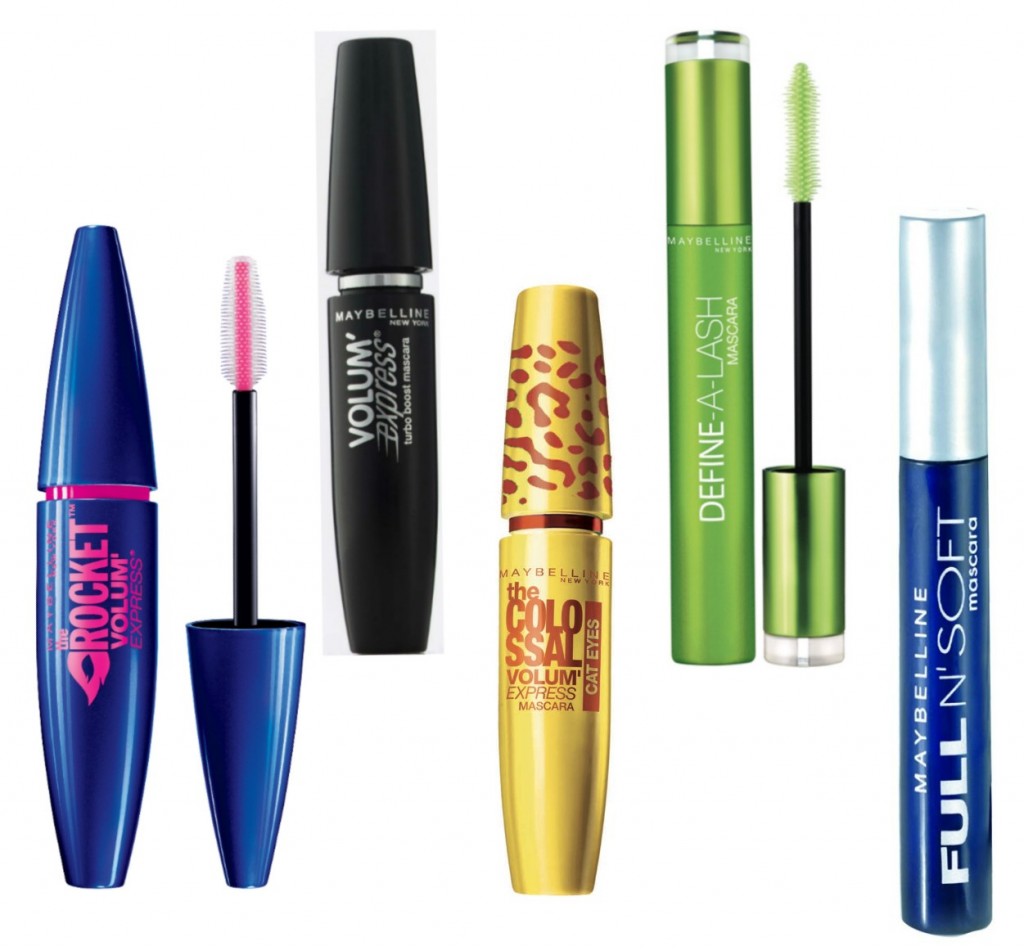
We all do it – use make-up even when a nagging feeling tells you that you should probably toss it.  I know, it hurts to throw away your $30 tube of mascara, just because it’s been three months.  What’s the harm?  And, I’m pretty pake (that’s cheap for any readers who aren’t from Hawaii), so I think back in med school, I’d use the same mascara for a year.  But,now I know better.  Microbial organisms are present on your lashes and they can flourish in tubes and bottles when given the chance. Serious eye infections can occur, so I’m listing some guidelines to follow with eye make-up.

1. Toss your mascara every three months

You’ve probably read this in your beauty magazine or blog, but where did this magic 3 month number come from?  A study done almost 40 years ago in a very reputable ophthalmology journal showed that bacterial and fungal growth was found in 36% of mascara tubes after 3 months.  So, now ophthalmologists make the recommendation to discard your mascara after 3 months.

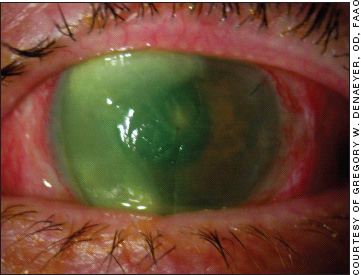
Like I said, I know this one is painful.  A little tube of Diorshow costs over $28 (I used to love this mascara) and I totally didn’t used to do what I knew in my heart was the right thing to do – throw it away after 3 months.  Think about it, you double dip your mascara wand and there are numerous normal bacteria on your lashes.  Once you apply your mascara, you’re putting that cespool of bacteria back into a liquid/gel bottle and sealing it tight.  That means staph and strep are growing and replicating inside your mascara tube.  Convinced now?  If not, here’s another great little fact – one study found that almost 80% of mascara samples contained Staph aureus and 13% contained Pseudomonas.  Pseudomonas is a terrible bacteria that is responsible for this below:

OK, so, I don’t think there’s ever been a reported case of Pseudomonas infection from mascara, however, that picture will probably convince you to dispose of your mascara in a timely fashion!

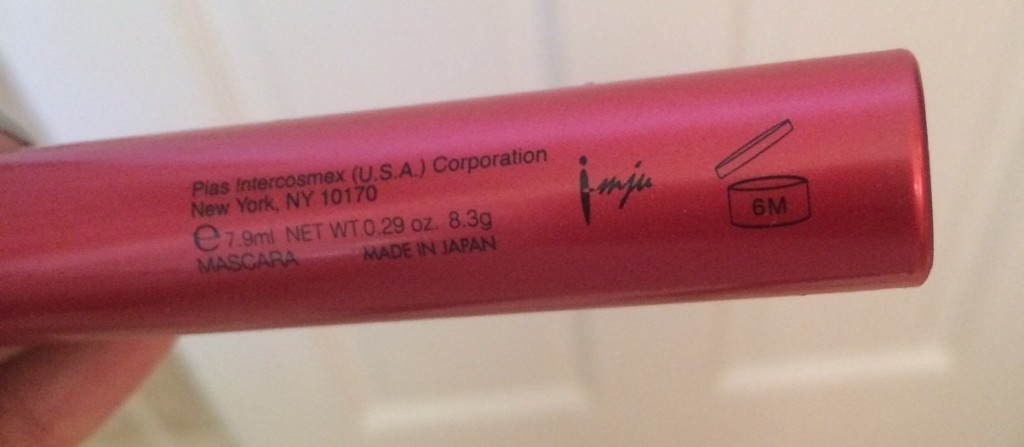
Once the mascara starts to smell funny, change in consistency and become clumpy or dry, then you know it’s time to dispose of it.  There are a lot of less expensive mascaras out there which work really well.  And, then you won’t feel so bad to throw it away.  Also, be conscious of the expiration date.  Before I wrote this blog post, I didn’t even realize mascaras had expiration dates – but here it is.  This is from the back of my Fiberwig mascara.

If you look closely, it actually states 6 months, but don’t do it – stick to the 3 month guideline to be safe.


2.  Don’t share mascara or eyeliner

Anything that it’s in gel/liquid form can harbor bacteria more than powder form.  Therefore, don’t share!  If I get my make-up done by a make-up artist, I always bring my own gel liner and mascara.  Perhaps that’s being too careful, but I have no idea how long that tube has been open, even if they use a clean, disposable applicator each time.   Honestly, probably the best thing to do is to avoid the samples at make-up counters all together.

3.  Dispose of eye make-up after an eye infection

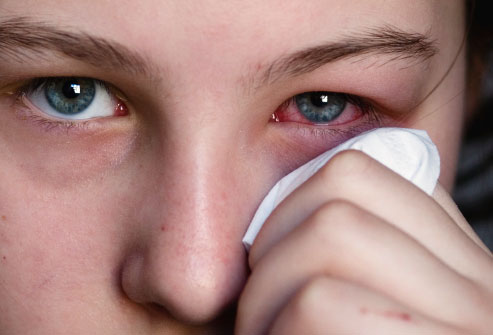
If you get conjunctivitis (pink eye), even if it resolves with antibiotic drops, you must throw away your eye make-up, at the very least your mascara.  Adenovirus particles can live on the surfaces of inanimate objects for upwards of one month .  And, you likely had the infection even before you started manifesting symptoms.  So it’s not good enough to just stop using the products when you have the conjunctivitis and the resume use once the pink eye improves.

One question I get asked often is if a patient can wear make-up if they have blepharitis.  Blepharitis is not an eye infection.  It’s inflammation of the eyelids, so technically, you can continue using your make-up with blepharitis.  However, there are certain types of make-up which are non-clogging and may be better tolerated by people with blepharitis.   Cosmetics may say “non-comedogenic” but that doesn’t necessarily mean they are oil-free.   AND, blepharitis can be caused by staph – remember, there’s a lot of staph just hanging out on your skin and lashes.   So, if you have the severe form of blepharitis – staph marginal disease – then check with your ophthalmologist regarding make-up use.

4.  Eye shadows (powder form) are good for 1-2 years, but don’t forget to clean your brushes

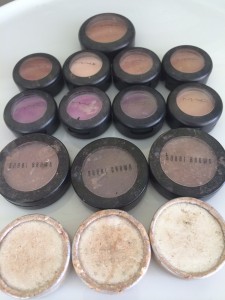
I have a bit of an eyeshadow addiction.  It started when I moved here to Hawaii.  I would get my make-up done at the MAC counter before our photos for our Honolulu magazine ad and have to buy $50 worth of makeup.  There’s just something so pretty about all the colors.  Anyway, here is the embarassing picture of the contents of my make-up drawer.  I own one eyeliner, one blush and a million pots of shadow.

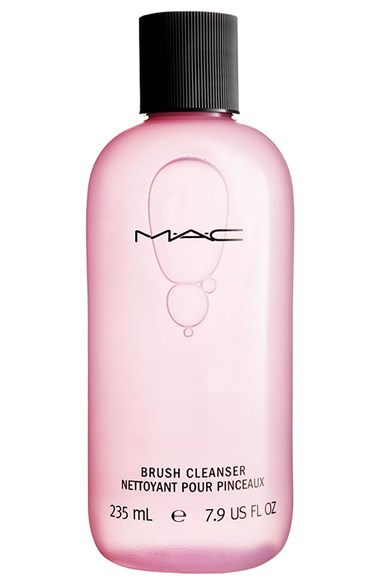
Thankfully, since most eye shadows are powders, they carry much less risk of bacterial infection.  So, I’m safe to indulge my eye shadow addiction.  Though, now that I pulled out all my eye shadows, I see some in this pile from my days in NYC, which was 8 years ago!  Guess those are going in the trash now.  Another thing is even if eye shadow is safe for 2 years,  people often neglect to clean their make-up brushes and these can harbor bacteria.  I clean my brushes with MAC cleaner.  I’ll also use baby shampoo for a real deep clean as well.

5.  Remove make-up before sleeping (even if you have lash extensions).

This is a great time to review some standard eyelid cleaning techniques.  I see a lot of blepharitis in my adult patients, especially in women who wear lash extensions.  They have the extensions and then wear make-up, but they are so worried about losing their precious extensions, that they don’t clean their eyelids properly.  This almost always results in blepharitis.  Washing your eyebrows and eyelids with antibacterial shampoo (Johnson & Johnson’s baby shampoo is what I prefer) can help control blepharitis.  Put a small bit of dilute baby shampoo on your ring finger and suds right on to the lid margin for 30 seconds on each eye.


Why do my child’s glasses keep getting stronger? This is one of the most common questions I encounter in my practice.  I see a patient after they have failed their vision screening exam at their pediatrician’s office and diagnose them with nearsightedness.  The following year, their myopia is worse and the glasses prescription has to be increased.  The year after, same thing happens.  I always reassure parents,”‘This is normal.  Expect the prescription to increase every year until they hit college age”.  But, of course, as a parent, it’s worrisome.   Parents always ask me about TV/video games/foods they can eat, anything that could help “strengthen” their children’s eyes.  Before, I would have to tell them that nothing could be done, it was just genetics.  But, not so anymore!

But, first, let’s just review what is myopia?  Myopia is what most people often call nearsightedness  – you can see up close, but not far away.


Myopia is the most common refractive error in kids, and it’s on the rise. My son is obsessed with asking if my husband is nearsighted or farsighted after we read this page in the Cat in the Hat book at bedtime.


For myopes, the light rays from the outside world are focused just in front of the retina.  It can be because the eye is a little longer than usual (axial myopia), sometimes for adults, it’s because there is a cataract refracting the light differently.  But, let’s stick to the kids for this discussion.

Myopic eye diagram

So, it makes sense if one parent is myopic, then the child has a good chance of becoming myopic as well.  Eye size is inherited just as hair color, height, etc.  My boys don’t wear glasses for real (though they are modeling them in the picture above), but I should qualify this as a YET.  I am not nearsighted, nor is anyone in my immediate family, however, my husband’s side is a different story.  So, there certainly is a good chance that they may require glasses in the future.

Now, here’s a little throwback to high school physics.  For nearsighted individuals, the lens shape (concave) helps to focus the light on to the retina.

Screen Shot 2015-03-17 at 12.56.21 PM

Now, to the good stuff?  What can be done?  Two new studies have come out which have had some very promising results in terms of decreasing the progression of nearsightedness in kids.

1.  Increase Time Outdoors

One study examined 2000 children in Australia and specifically looked at the type of activities children were doing.  They then followed-up the kids 5- 6 years later to figure out which activities seemed to make a child more nearsighted.

  • Time spent indoors
  • Time spent doing near work (reading, homework, iphone, etc).
  • Family history of nearsightedness

So, what does this mean.  Being outdoors in the sunlight, is protective.  Kids who spent 1-2 hours/day outdoors, were on average a whole diopter less nearsighted than their peers who did not.  That would mean -3.00 prescription instead of a -4.00 prescription. And, the more time kids spent indoors on devices made their myopia worse.

But time spent doing near work, in and of itself, did not cause nearsightedness.  So, the belief that too much time spent on the iPad/iphone will cause a child to need glasses is incorrect.  I am asked this leading question at least daily by parents “Using the iPhone or playing video games is bad for the eyes, right?”  .  They look at me hopefully, expecting me to dispense a lecture to the kids of the dangers of said devices.  But, unfortunately, it’s just not true.  Now, what I do tell them, is that first and foremost, too much time spent on these devices is not great for their brain.  A policy statement issued  by the American Academy of Pediatrics warned about the dangers of attention problems, sleep difficulties and obesity from too much time spent on media devices.  However, there have been no conclusive studies which link media devices with eye or vision problems.  BUT, when kids are playing on these devices, it does make it more difficult to get them outdoors, in the protective UV light and that can make them more nearsighted. So, is it the bright light or the UV light that’s protective?  Well, studies in animals seem to indicate that it might just be bright light which is helpful, though it’s still too early to draw conclusions.  However, I still recommend that kids should always wear protective hats, sunglasses and clothing when outdoors, especially here in Hawaii.

Being myopic is not just a pain for children to wear glasses, it can also have serious consequences in terms of the health of a child’s eye.  People who are myopic have longer eyes than individuals who are not.  That predisposes them to having retinal tears and detachments if their prescription is higher than -6.00 D.   It’s basically because the same amount of retina is being stretched more in a myopic eye than in a normal eye.  This can leads to areas of thinning or tears which can cause retinal detachments.


2.  Atropine 0.01%

Another important study assessed the effectiveness of a dilute version of a dilating drop – atropine – in delaying the progression of nearsightedness.  Studies have been done with different strengths of this drop in the past, but as you may know from going to the ophthalmologist, even when dilute, dilating drops can cause side effects, like blurry vision and sensitivity to sunlight.  But, this study looked atropine 0.01%, which is 1/100th the strength we use in the clinic.  When administered daily to kids, it slowed their nearsightedness and also decreased the elongation of their eyeball.  Therefore, they were less at risk for those dangerous retinal tears or detachments.  I now offer these drops to a high select group of patients who have nearsightedness which is worsening quickly.

Schools in China are already applying the outdoor time in an effort to decrease their incidence of nearsightedness.  And, for those kids for whom this preventative treatment is not enough, then there is hope with the atropine drop.  As more studies come out, the research will be even better in helping us slow nearsightedness in our kids.


Jan 2018 Update:

I have now been prescribing low dose atropine for the past 3 years.  I have about 10 patients who have completed treatment and another 40 or so who are currently undergoing treatment.  I have been impressed with its limited side effects and the its efficacy.  However, it’s a difficult treatment – simply because it requires putting an eye drop in a kid’s eye ever single day.  If you have kids, then you know, that can be quite a challenge.  It’s just adding one more thing to the list of things that needs to be done.  But, I do think it’s worth it, so talk to your pediatric ophthalmologist about it and see if your child is a good candidate.


I just did a recent article for Midweek about pink eye.  Feel free to check it out – I just talk about prevention and treatment of conjunctivitis.  But, that’s not the topic of this post.  The Midweek writer’s first question to me was “What got you interested in pediatric ophthalmology?”.   I’m lucky enough that this question is such a non-brainer.  Is there anything better than restoring sight to a child? Complex surgery or a simple pair of glasses – both are so important in the developing vision of children.  That question made me think about one of our my first patients here in Hawaii.  I worked for a year after my fellowship as an attending at Boston Children’s Hospital. but there I was surrounded by senior physicians.  If I needed help on a case, or advice, they were there to assist.  When I moved out here with my husband 6 years ago, it was, honestly a bit terrifying.  I had lost my safety net and I had to build a practice from the ground up, somehow convincing parents that despite looking young and inexperienced, that I actually was a capable surgeon.
Niko was just a 6 year old boy when he came into see me my first month practicing at Honolulu Eye Clinic.

He had previously been living in California and had recently moved to Hawaii.  His mom had noted that he squinted a lot.   Niko was a smart little boy, but he had real trouble with the eye chart.  When I dilated his eyes, I discovered cataractsin both eyes.  A lot of people are often surprised that children and even babies can get cataracts.  It’s obviously much more rare than in adults, but it does occur.   I met with Niko and his sweet mom, Louise and told them that we should schedule surgery for Niko.

Marking Niko's eye for surgery in the pre-op area

This is what Niko’s mom wrote about her experience:

We first found out about a vision problem when Nikolas and I were reunited in Hawaii after a year of separation due to an illness of mine. He spent kindergarten year in San Jose California with my parents and siblings while I received treatment.While in San Jose he complained about not being able to see the board at school towards the end of the school year. When I picked him up and brought him back to Hawaii I decided to take him for a complete physical and suggested to the clinic physician for an eye exam as well.  They tested his eyes and we discovered that he couldn’t read most of the letters. The optometrist doing the exam referred us to Dr. Wong. He said that Niko may have cataracts. I was shocked and worried because he had just turned 6 yrs old.
 
Dr. Wong and her staff were so warm and welcoming. Even before we stepped into the clinic, I had already spoken to her on the phone several times. She told me about herself and her experience that gave me such relief to have found someone that can help my sons condition.  She performed surgery first on the right eye about 4 wks later and the left eye another 4 wks after that. The surgeries went well and Niko mentioned that everything so much brighter than before on the way to school a few days after. I was moved to tears of joy.
He now wears bifocal glasses that he loves and thrives in school. He is always excited to see Dr. Wong and her loving staff for regular check ups. He even mentioned to me several times that when he grows up he wants to become an eye doctor just like Dr. Wong so he can also help others see better.
 

Niko gave me this card.  Six years later, I still keep this card at my house.

After surgery, Niko’s first words to me were “I  can finally see the clock in school!”  His vision improved to 20/20 in each eye.

Each time he came for his post-operative visit, Niko would show off his latest dance moves for my staff.  I mean, seriously, is there anything better than getting that letter from a Mom or this card from a six year old?  He got cute bifocal glasses which he proudly wore all the time.

And, now 6 years later, Niko is an aspiring actor and model!


I know pediatric ophthalmology is not one of the “sexy” subspecialties of ophthalmology.  Everyone wants to do Cornea or Cataract with all the fun laser cataract machines or Retina with the cool new macular degeneration drugs that are coming out.  But, peds/strabismus has its HUGE rewards and I for one, cannot think of anything else I’d rather do.


I realize I haven’t written many posts about being a Mom and so I thought it’s about time I did.  I’m not going to lie – juggling 3 kids younger than 5 years old, work and being a wife is challenging.  But, I actually think because of my new found commitment   obsession with being organized, our family is actually able to survive.  I love being an ophthalmologist, I would never give it up in a million years.  But, being a mother and wife are very important to me as well.  To do all of it, I have became extremely organized and have a million checklists for it all. I thought I’d share some of those tips with you.  My favorite blog for tips and tricks is www.iheartorganizing.blogspot.com.  I started reading this blog when I was expecting Arya.  The author of this blog has 3 boys and at the time, I wasn’t sure if Arya was going to be a boy or a girl and I could very easily relate to her need to tame the clutter.  Now, I don’t have the time or energy to spend hours making beautiful labels for everything as many mommy blogs out there do.  I need a system in place to make my life easier, that’s it.  So, here they are, things that have helped me stay organized and allowed us to function as a family.


1. Getting Ready in the Morning

Any mom knows this can be extremely tough.  Get yourself dressed, get the kids all packed and ready to go so that you’re not late for work.  My oldest son thrives on routine and schedules (actually I think all kids do), so I made this checklist for him, borrowed from here.  He’s 5 years old, so he’s really old enough to be helping get himself ready for school.  Heck, by the time I was 11 years old, I had to pack my own lunch the night before school!  And, he loves this list.  I laminated it so he can check it off with a dry erase marker.  Often, he will tell me if I’ve done something out of order (I mentioned he loves routine, right?).

Morning Routine

In addition, I have checklists for what goes into each child’s backpack.  I created this because my husband always wanted to help during the morning dash, but he was always asking me “What do I need to pack for them?”  If I have to tell him, then I can just do it myself, so instead I made checklists.


If they have activities for the day, I have checklists for those bags too – swim bag, karate, etc.  I won’t bore you with those.  But, everything is packed and ready to go the night before.

2.  Mail/clutter

I hate mail.  I’m not sure why, but I just can’t stand going through junk mail and paying bills.  I pay the bills at the office just fine, but home bills are another story.  To curb all the mail/bills/multitude of artwork my children bring home from school, I created a filing system.  I basically scoured pinterest and did a combination of things that worked for us.  All mail/art goes into the gold tray when I walk in the door.  Then, I sort it into this wall hanging unit which is set up in our office nook.  It seems to work – haven’t lost bills so far!


3.  Toys (Clean-up)

I realized I was spending about an hour a each night cleaning up toys, organizing, etc and like Norma Ray, I decided I wasn’t going to do it anymore.  The boys are in preschool and at school, they clean up their toys beautifully, so why not at home?  I love baskets for toys and now all the baskets have labels on them, so the boys know where everything goes.

4.  Meals

I think this is probably the most difficult to do for working Moms.  My kids want to eat at 5:30 pm, they’re starving by then.  So, I need to have as much of the prep work done before I get home so that I can cook in a flash.  To stay organized, I use this meal planner – laminated cards with the recipes on one side and a list of the ingredients on the back and reference number for where the recipe is (Pinterest, particular recipe book, all recipes.com.  I sit down every Sunday and plan out the week, then I can just flip over the card and write out my shopping list from the ingredients).  I have color coded the cards – gray = crockpot, blue = pasta, green = grill, etc.


I painted a magnetic board with chalkboard paint and hung it in my kitchen.  I have a little magnet chalkboard container in which I keep the meal cards.

So, those are just a few of my organizational systems.  My house certainly is not a well oiled machine.  There are days where we feel like we barely keep it together, but these things help us juggle it all!

© 2011 Honolulu Eye Doctor & Mom Suffusion theme by Sayontan Sinha